Open-cut excavation and underground civil, self-performed to utility standard. Duct bank, manholes and vaults, service laterals, and hydro-vac excavation — put in the ground once, backfilled to spec, and the surface returned the way you found it.
Where open-cut is the right call, the underground scope still sets the schedule for every trade behind it. We treat the excavation as a schedule problem first — soils, dewatering, protective systems, and utility locates resolved before the machine walks on — so the trench gets opened, the product gets set, and the corridor gets restored on the date you committed to. Everything below is self-performed by our own crews and iron.
Trench-and-backfill for electric, gas, water, sewer, and telecom — excavated to line and grade, bedded on the specified material, and backfilled and compacted to spec with density testing coordinated where required. Every excavation is protected by the right system for the soil and depth: sloping, benching, shoring, or a trench box. A competent person is on the crew, classifies the soil, selects the protective system, and inspects the excavation before entry and as conditions change. Spoil management, dewatering, and one-call / 811 locates are handled before we break ground.
Electric and telecom getaways built to the utility's detail. We install concrete-encased duct bank — conduit racked on spacers to maintain separation, rebar cage tied, formed and poured to the required cover (red concrete where specified) — and direct-bury conduit on sand bedding with warning tape and tracer as detailed. Every duct is mandrel-proofed and a pull rope left in before it's turned over, so the cable crew pulls into a clean, proven path.
We set precast electric and communication manholes, vaults, and handholes, and form cast-in-place structures where the detail calls for it — on compacted, leveled base, with chimney and knockout seals, sumps, and pulling irons as specified. We also form and pour transformer and switchgear pads and equipment foundations, built traffic-rated where they land in the roadway or drive lane.
New service laterals and connections into existing infrastructure — excavated, installed, and tied in with the live-system cut-in coordinated to the operator's requirements and outage windows. Where a lateral crosses a road, drive, or utility that can't be cut open, we bore it instead of trenching it.
Non-destructive digging where a bucket doesn't belong. We pothole and daylight existing utilities with vacuum excavation to verify depth and alignment before we dig or bore, and use it for precise, low-risk excavation in congested corridors, around live utilities, and inside energized substations — exposing what's there instead of finding it with a bucket.
| Scope | Method | Notes |
|---|---|---|
| Trench & backfill | Open-cut, sloped / benched / shored | Bedding to spec, compaction with density testing, competent-person trench safety |
| Concrete-encased duct bank | Racked on spacers, rebar cage, formed & poured | Cover to detail, red concrete where specified, mandrel-proofed |
| Direct-bury conduit & cable | Open trench, sand bedding | Warning tape, tracer wire, marker balls on request |
| Manholes, vaults & handholes | Precast set or cast-in-place | Traffic-rated, chimney/knockout seals, sump, pulling irons |
| Equipment pads & foundations | Cast-in-place / precast | Transformer, switchgear, and generator pads to utility detail |
| Service laterals & tie-ins | Open-cut or bored | Live cut-ins coordinated to operator windows |
| Hydro / vacuum excavation | Non-destructive potholing | Daylighting near live utilities, congested corridors, energized substations |
Means and methods are set to the governing utility, DOT, or owner specification for each project. Density testing, special inspections, and material submittals coordinated as the scope requires.
The most expensive excavation is the one that hits something. Before a bucket moves, we notify one-call, pothole the crossings with vacuum excavation, and expose existing utilities so the crew is digging to a known picture — not guessing at a mark-out. In congested corridors and inside energized substations, hydro-vac is how the whole excavation gets done.
It's the same discipline that lets developers and EPCs hand us work next to live infrastructure: we protect what's already in the ground first.
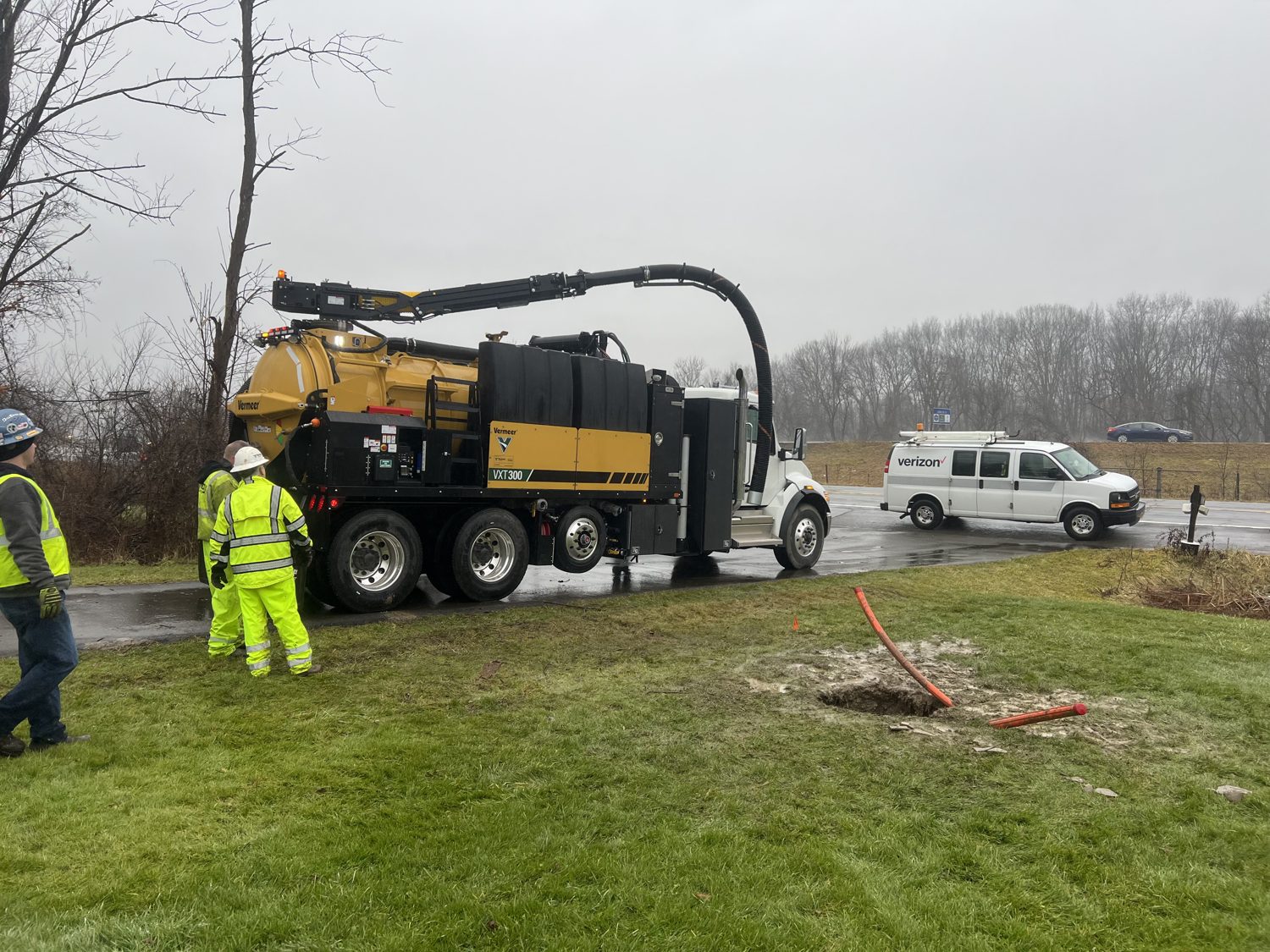
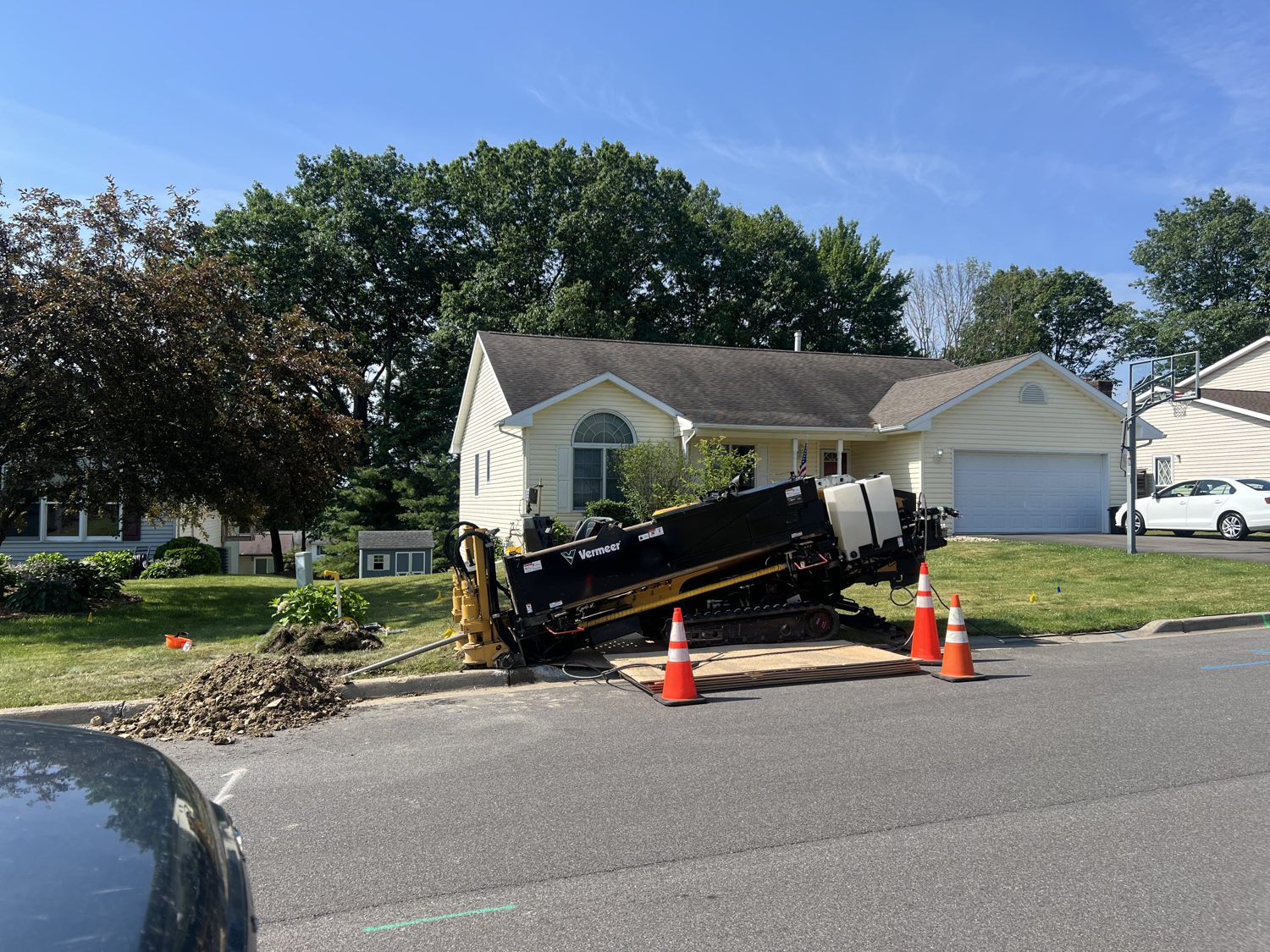
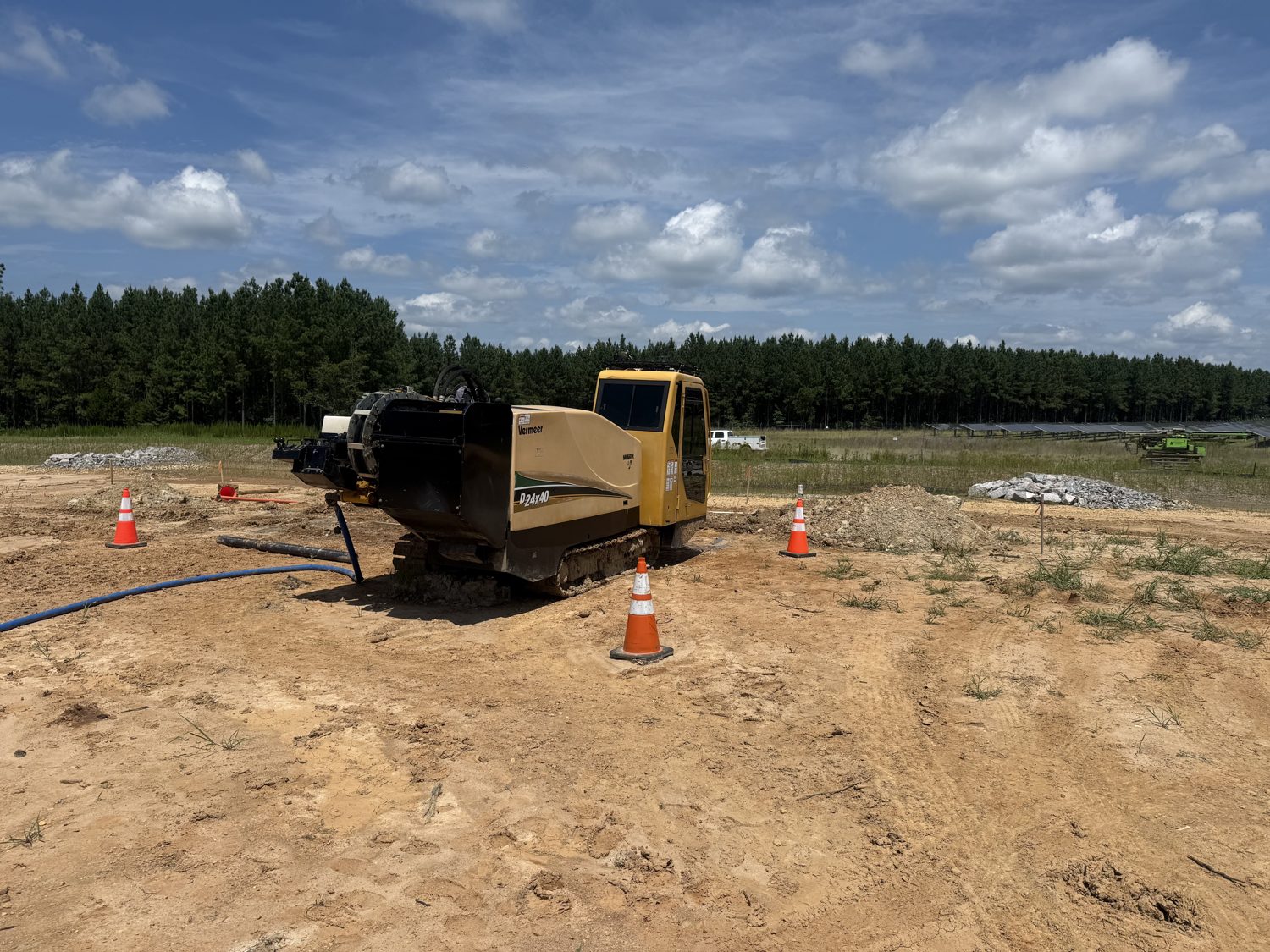
Owner-operated crews and iron on active excavation and underground civil. Click any photo to open it.
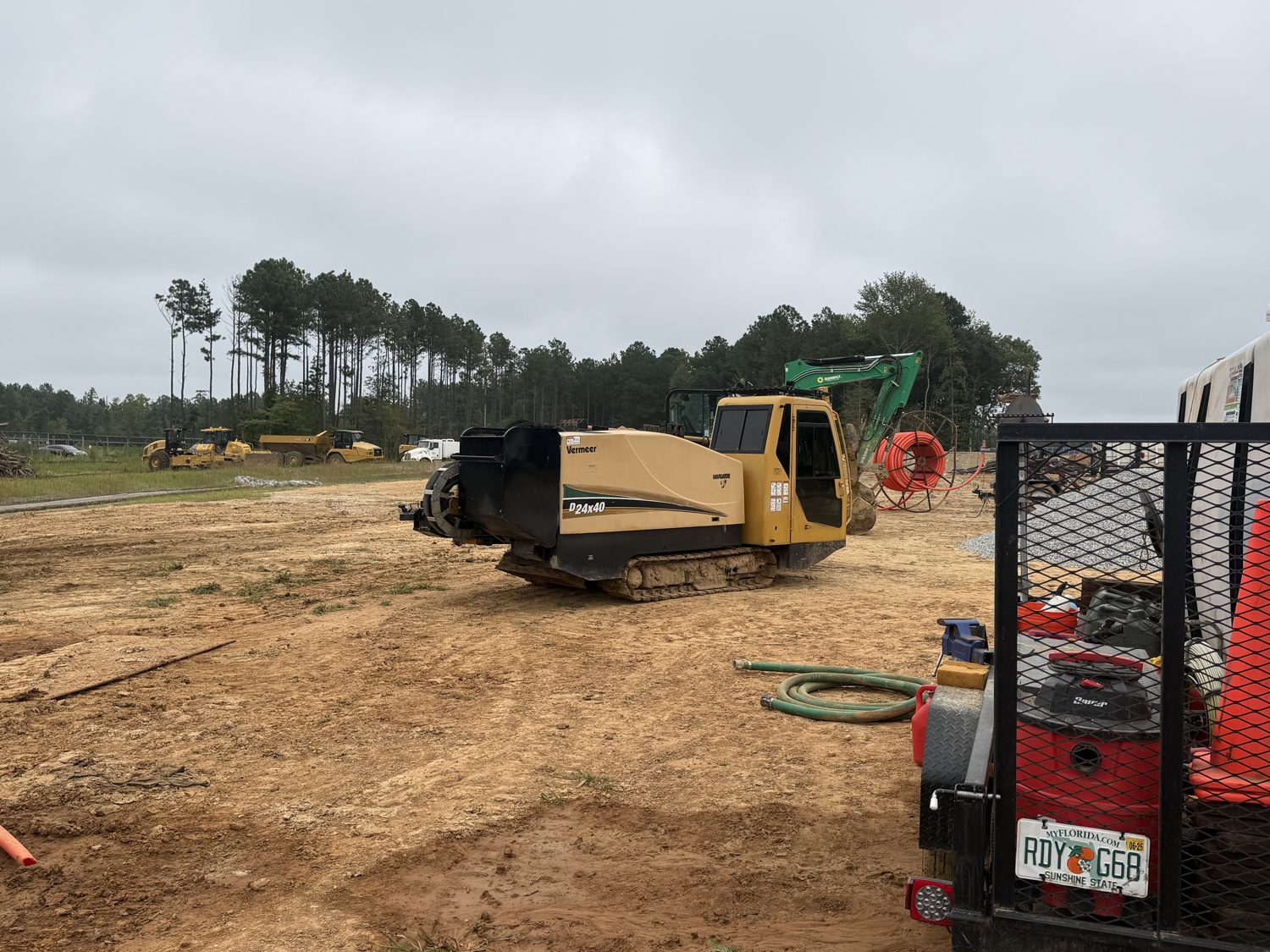
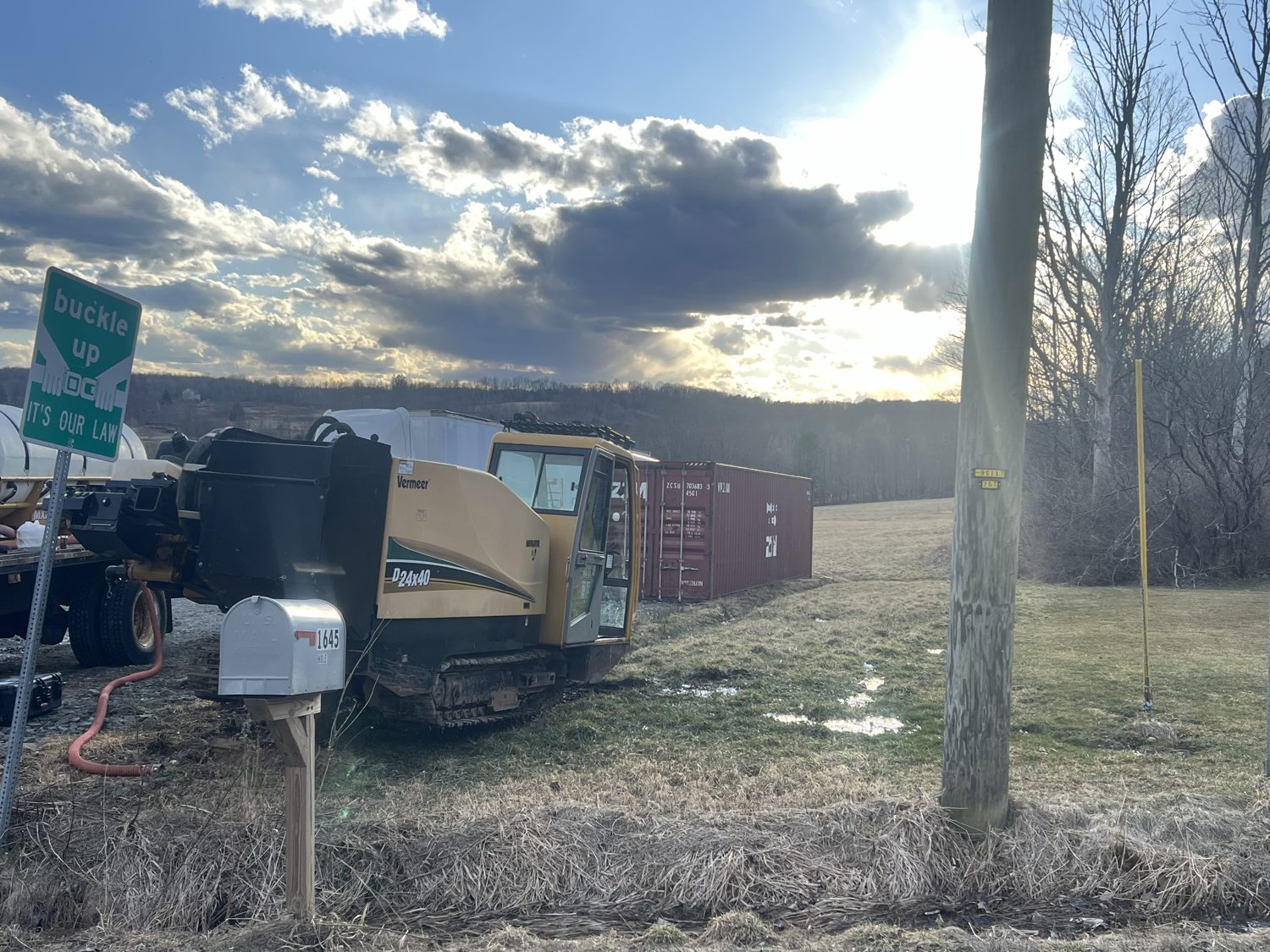
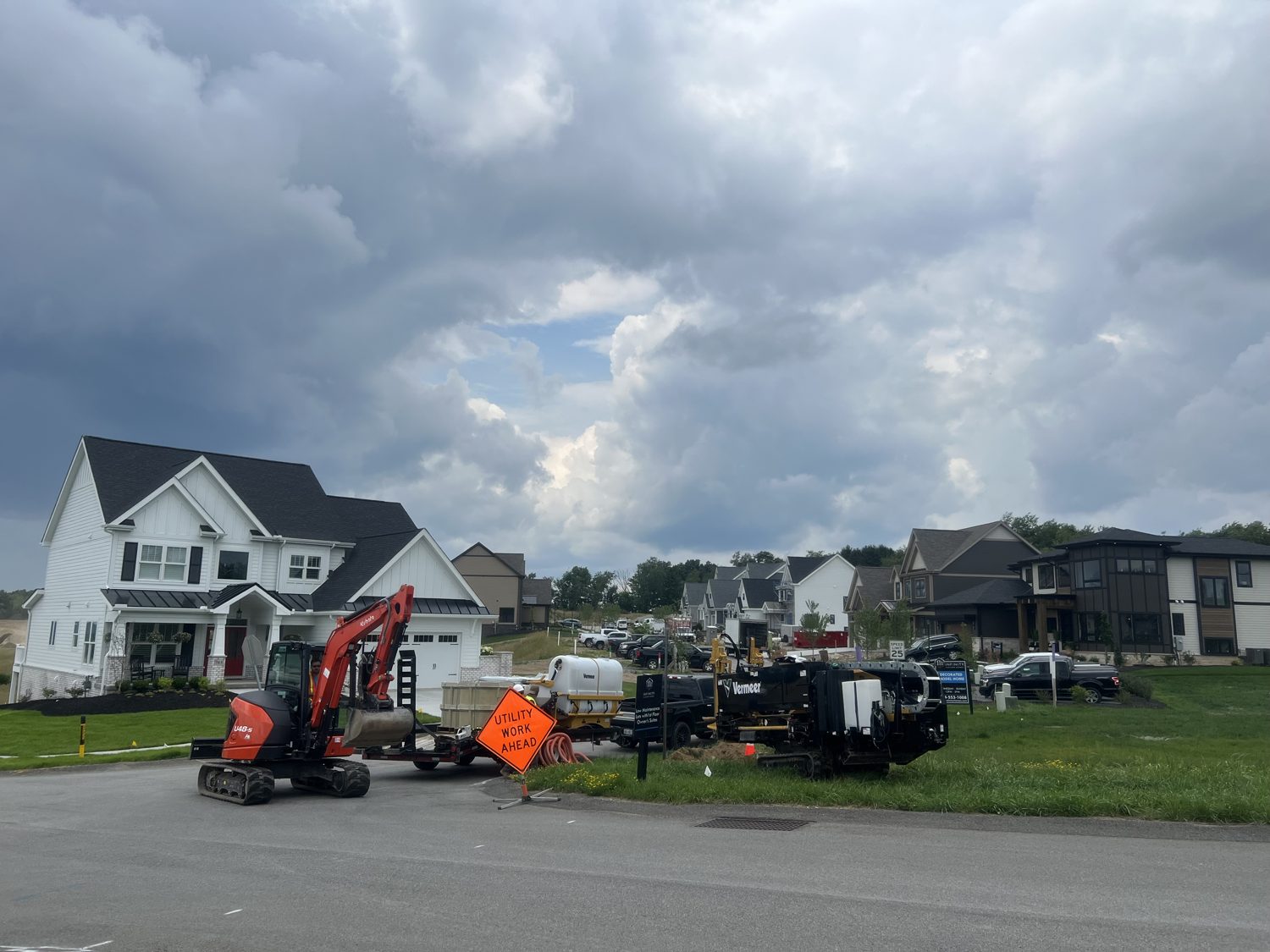
Yes. A competent person is on every excavation crew. We classify the soil, select the protective system — sloping, benching, shoring, or trench box — to the depth and conditions, and inspect the excavation before entry and through the day.
Yes. We excavate, rack the conduit on spacers to hold separation, tie the rebar cage, form and pour the encasement to the required cover, and mandrel-proof every duct with a pull rope left in before turnover.
We notify one-call / 811 before every dig, pothole with hydro-vacuum to daylight existing utilities, and hand-dig within the tolerance zone. In congested corridors and energized substations, vacuum excavation does the digging start to finish.
Yes. We backfill and compact to spec, then restore the corridor — trench paving, concrete and curb, or topsoil, seed, and sod — so the surface is returned in the condition the owner requires.
Tell us about the trenching, the duct bank, the structures, and the schedule. We'll respond with a capability package and a plan to keep the underground scope off your critical path.
Request a bid
 Building Connections. Powering Progress.